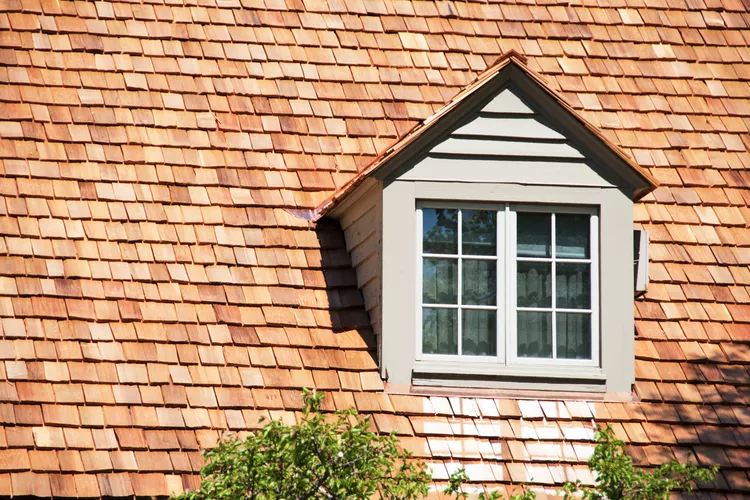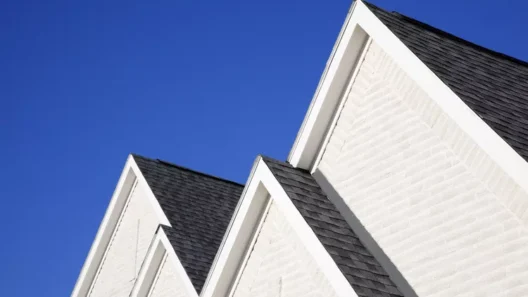




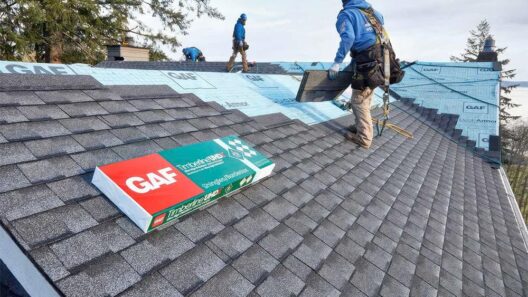


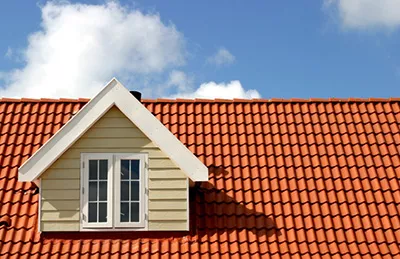
Tiled roofs are beautiful and durable. Traditionally, most roofing tiles were made from slate or a fired clay or terracotta product. Today’s roofing tiles are concrete, clay, slate, metal, or composite and come in shades of red, brown, or gray.
Tile roofing is a great choice for roofs that experience hot weather or exposure to salt air. It is also expensive and heavy, but that can be expected from a roofing material that lasts up to 100 years.1
Learn the pros and cons of tile roofing, including clay, concrete, and slate tiles.
Types of Tile Roofs
- Clay: Though more expensive than an asphalt roofing system, clay tiles last much longer, offsetting the installation cost.
- Concrete: Concrete tiles typically don’t last as long as clay tiles but cost less and weigh less.
- Slate: While costly, slate tiles come in various colors and styles to match any home style, from medieval to contemporary European.2
- Metal: Metal roofs come in different types of metal like copper, aluminum, zinc, and steel.
- Composite: Made of polyethylene, composite tiles look like traditional clay or concrete tiles but are less prone to breakage.
- Solar: Photovoltaic tiles are mini solar panels that resemble classic tiles but produce some electricity for the home.
Pros and Cons
Pros
- Long-lasting
- Impervious to rot
- Sustainable material
- Energy efficient
- Low maintenance
Cons
- High cost
- Difficult installation
- Heavyweight
- Tiles are brittle
- Not for all roof slopes
Pros
A tile roof can last over 100 years, especially when installed in the right climate. Clay and concrete tile roofs have been known to withstand hail, high winds, and even fire. Most manufacturers offer warranties, some up to 50 years or more.3
Grimmer, Anne and Williams, Paul. The Preservation and Repair of Historic Clay Tile Roofs. National Park Service.
Modern tile roofs come in sheets of tiles for easier installation.
Tile is considered to be a sustainable roofing material. They are made from earth minerals, not synthetic materials, and they can be pulverized and recycled when they are removed.4 The heavy thermal mass of tiles helps regulate indoor temperatures.
Cons
Installing tile roofing requires professional roofing contractors with extensive experience, which further adds to the cost. The tiles must be measured, laid in a specific pattern, and checked so that no moisture gets through.
The roofing structure must handle the weight of a tile roof, which may be as much as 2,000 pounds per 100 square feet for clay tile and 700 pounds for concrete tile. An asphalt roof, by comparison, weighs only around 275 to 425 pounds across the same area.
While very durable, clay, slate, and concrete tiles can be broken if they suffer a heavy impact, such as from falling tree branches, or even from walking on them.2
Repairs can be expensive. Tile roofs are suitable only for roofs with relatively sharp slopes. They should not be used on roofs with pitches of less than 4:12.
Cost
The cost to install a tile roof runs from $7 to $25 per square foot. Materials alone cost an average of $6 per square foot. Labor alone costs an average of $10 per square foot.
| Square Footage | Low Cost | High Cost |
| 500 | $3,500 | $12,500 |
| 600 | $4,200 | $15,000 |
| 700 | $4,900 | $17,500 |
| 800 | $5,600 | $20,000 |
| 900 | $6,300 | $22,500 |
| 1,000 | $7,000 | $25,000 |
| 1,100 | $7,700 | $27,500 |
| 1,200 | $8,400 | $30,000 |
| 1,300 | $9,100 | $32,500 |
| 1,400 | $9,800 | $35,000 |
| 1,500 | $10,500 | $37,500 |
Styles
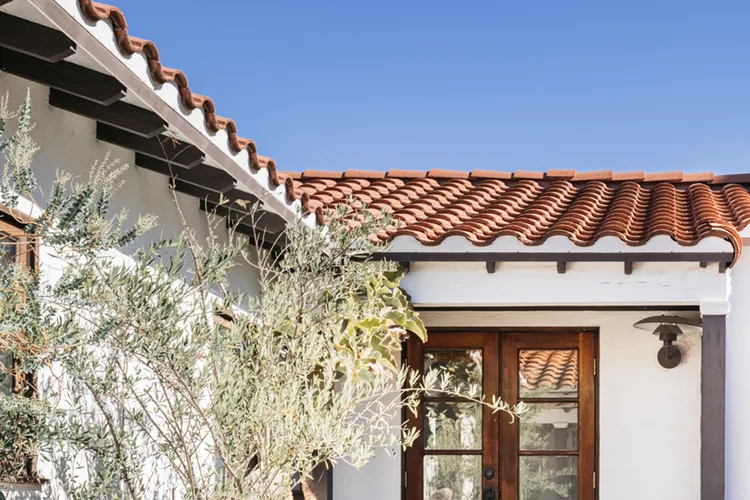
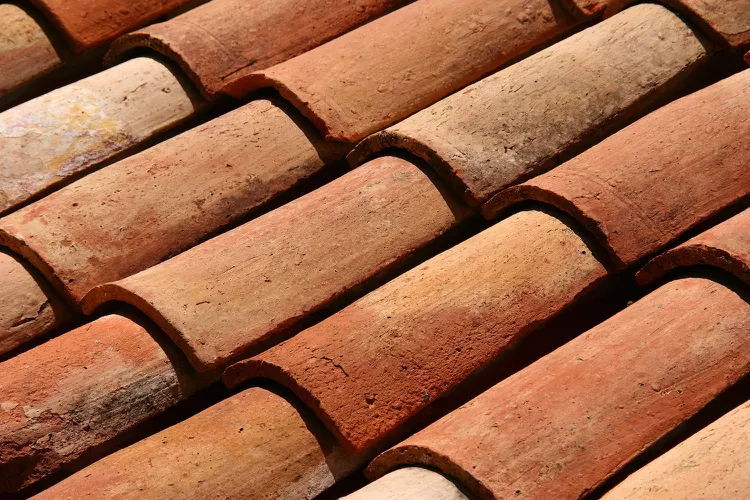
- Spanish tiles: The classic Southwest roof, resembling rows of lapping waves with troughs between the rows to carry water away. They are best suited for regions where rains might be infrequent but very heavy when they do occur. Clay, terra-cotta, and concrete tiles are all available in this style.
- Scandia tiles: Resembling Spanish tiles inverted so they are upside down. They look like sharp vertical ridges with wide scallop-shaped troughs. This style is common in architecture based on northern European styles.
- Double Roman tiles: These tiles look like Spanish tiles, but the rows have distinct ribs that are quite visible. The water troughs are more frequent, though smaller. These tiles are often used in Mediterranean architecture. Often made of concrete, they are also available in clay and terra-cotta.
- Flat shake tiles: Usually made of concrete and fabricated to resemble the texture of granulated asphalt shingles or wood shakes. These roofs have relatively flat surfaces that easily shed frequent light rains, but may not be ideal where heavy rainfalls are common. These tiles readily adapt to almost any architectural style.
- Pantile roofs: Made of clay tiles formed into a flattened “S” shape, creating a ripple appearance. Pantiles are considerably lighter than most other tiles.
- Barrel tiles: Semi-cylindrical tiles like Spanish and Roman, but the cylinders are slightly tapered so they are wider at one end. The tapering shape makes these a good choice for curved roofs.
- French tiles: These tiles look like the inverted form of the Roman roof, with much wider troughs for channeling away heavy rainfalls.
- Riviera tiles: Essentially a flattened form of double Roman tiles, in which the humps are flat ridges interrupting shallow, flat-bottomed troughs.