


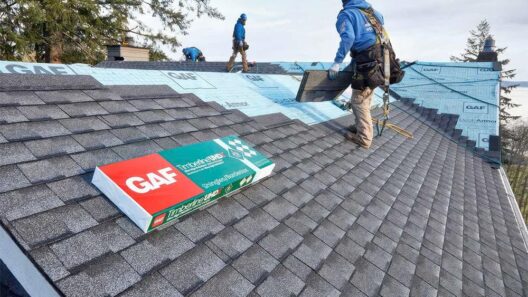


Roofing underlayment fits between the roof deck and the shingles to provide additional insulation to the home’s top while acting as a waterproof barrier to prevent moisture from entering your attic. It is one of the most overlooked parts of your roof. There are three types of roofing underlayment used for different roofs:
- Asphalt-saturated felt
- Rubberized asphalt
- Synthetic
Similar to your shingles, the roofing underlayment needs to be replaced at semi-regular intervals based on the roof’s condition. Underlayment was traditionally only available in one type, known as asphalt-saturated felt, but over the years, additional types have been developed. This guide will help you discover the differences between the various types of roofing underlayment so you can select the right type for your home.
What Is Roofing Underlayment?
Roofing underlayment is a layer of synthetic fiber or felt installed over the roof deck and under the shingles. This layer acts as a waterproof barrier to prevent moisture from seeping into the home and helps insulate the roof.
Asphalt-Saturated Felt
- Best for: Inexpensive roof repairs, slate shingles, and tile shingles
- Key characteristics: Water resistant, not waterproof; comes in two standard weights (15 pounds or 30 pounds)
The classic type of roof underlayment is known as asphalt-saturated felt. It’s similar to tar paper, except that the waterproofing ingredient is asphalt instead of tar. This style of roof underlayment installation has been used for decades to provide adequate moisture protection and insulation. Still, it doesn’t measure up to the flexibility and durability of rubberized asphalt or synthetic roof underlayment.
Asphalt-saturated felt is also known as roofing felt or felt paper. As the most affordable option for roof underlayment installation, roofing felt remains a popular option that can improve the durability of the roof deck to protect against impact damage from hailstones or airborne debris, like tree branches. It comes in two standard weights, including 15 pounds per hundred square feet (No. 15 felt) and 30 pounds per hundred square feet (No. 30 felt).
It’s recommended to use No. 15 felt for light-duty projects, like finishing the roof of a shed or detached garage, while No. 30 is the best option for protecting your home from moisture. If you are concerned about your choice, just remember that roof underlayment can be installed in multiple layers to provide additional protection to the home.
Rubberized Asphalt
- Best for: Premium roofing protection, leak prevention, and extreme temperatures
- Key characteristics: Waterproof; self-adhering and self-healing; patchable; great for variable climates
Rubberized asphalt is a top-quality installation option that provides the highest level of waterproofing. Install this underlayment material around leak-prone areas, like eaves, valleys, vents, chimneys, and skylights, to help prevent water damage before it can become a problem. The underlayment is made primarily of rubber polymers and asphalt, but the exact composition varies from product to product.
This variability allows manufacturers to slightly alter the design to improve waterproofing, fiberglass reinforcement, or even sound absorption. Additionally, if rubberized asphalt is damaged or there is a leak, it can be patched, though the outer roofing layer will need to be partially removed for access. However, the drawback to installing this underlayment is that it is the most expensive type, so if you are looking for a way to cut costs, rubberized asphalt underlayment isn’t the right choice.
Rubberized asphalt roof underlayment is also known as self-adhering because it has an adhesive backing that sticks directly to the roof deck. The adhesive helps to form a waterproof seal between the deck and the underlayment, preventing moisture from penetrating through the roof. The composition of rubberized asphalt underlayment allows it to expand and contract without cracking or breaking. This makes it an excellent choice for regions that experience extreme temperature changes throughout the year.
Synthetics
- Best for: Durability, tear-resistance, and mold-resistance
- Key characteristics: High heat tolerance, recyclable, goes on fast, easy to walk on, reliably water resistant
The most recently developed type of roof underlayment, synthetics, are made commonly from woven or spun polyethylene or polypropylene to increase durability and tear-resistance significantly compared to saturated-asphalt underlayment. This type of roof underlayment installation costs more than asphalt-saturated felt. However, it is still more affordable than rubberized asphalt underlayment, making it a good choice for individuals looking for a less expensive option without sacrificing durability.
Synthetics aren’t just designed for increased durability and tear resistance; this underlayment is also very adequate for waterproofing, though it doesn’t quite reach the level of rubberized asphalt. If you have a home prone to mold, synthetic roof underlayment is recommended because this material repels water and is inert to mold.
The use of synthetic roof underlayment has gradually increased since it was introduced to the market. It has anti-slip properties that make the underlayment easier to walk on during roofing projects and an elasticity that helps the underlayment expand and contract with temperature changes to prevent tearing. The rolls are typically lighter than other underlayment options and often come with clear lines and overlap guides for quick, efficient installation.
Choosing a Roof Underlayment
Even after learning more about the three main types of roof underlayment, you may be unsure which kind is the right option for your home. To determine the best roof underlayment, it’s necessary to consider a few critical factors, including the climate, top roof layer material, durability, water resistance, and cost.
Climate
The climate impacts any materials installed outdoors because they are exposed to seasonal temperature changes. For homes located in areas with relatively constant temperatures, an asphalt-saturated roof underlayment is a good option. Still, if you live in an area that experiences extreme temperature changes throughout the year, rubberized asphalt is the best choice. Synthetics are also a suitable option for regions with broad temperature changes.
Type of Roof
- Asphalt shingles: Roofs built with traditional shingles pair well with rubberized asphalt and asphalt-saturated roof underlayment.
- Slate: Rubberized asphalt and asphalt-saturated underlayment are also suitable for slate shingles.
- Metal: If you have a metal roof, it’s recommended to invest in synthetic roof underlayment because this material is more heat-resistant than rubberized or asphalt-saturated underlayment.
Durability
Opt for synthetic roof underlayment if durability and tear resistance are necessary for your roof. However, if you want to prioritize waterproofing, spend a little more to install rubberized asphalt.
Cost
Remember that if cost is a factor, it’s essential to know that asphalt-saturated underlayment is the most affordable choice. Synthetic roof underlayment is the next step up in price, while rubberized asphalt is the most expensive option.